
Published on October 27, 2026. The images in this article are AI generated illustrations.
In April 2027, Japan will replace its decades old technical intern training program with the Employment for Skill Development program, which makes learning Japanese a formal requirement for hundreds of thousands of future workers. Five months before the launch, a government survey shows the country is not ready: of the organizations preparing to receive these workers, only 14.7 percent have secured the Japanese language teachers they need, while 35.9 percent say they see no prospect of securing any. (Source : The Japan Times, japantimes.co.jp, October 25, 2026, voir la source ; NHK, news.web.nhk, October 23, 2026, voir la source)
Why the new program cannot function without teachers
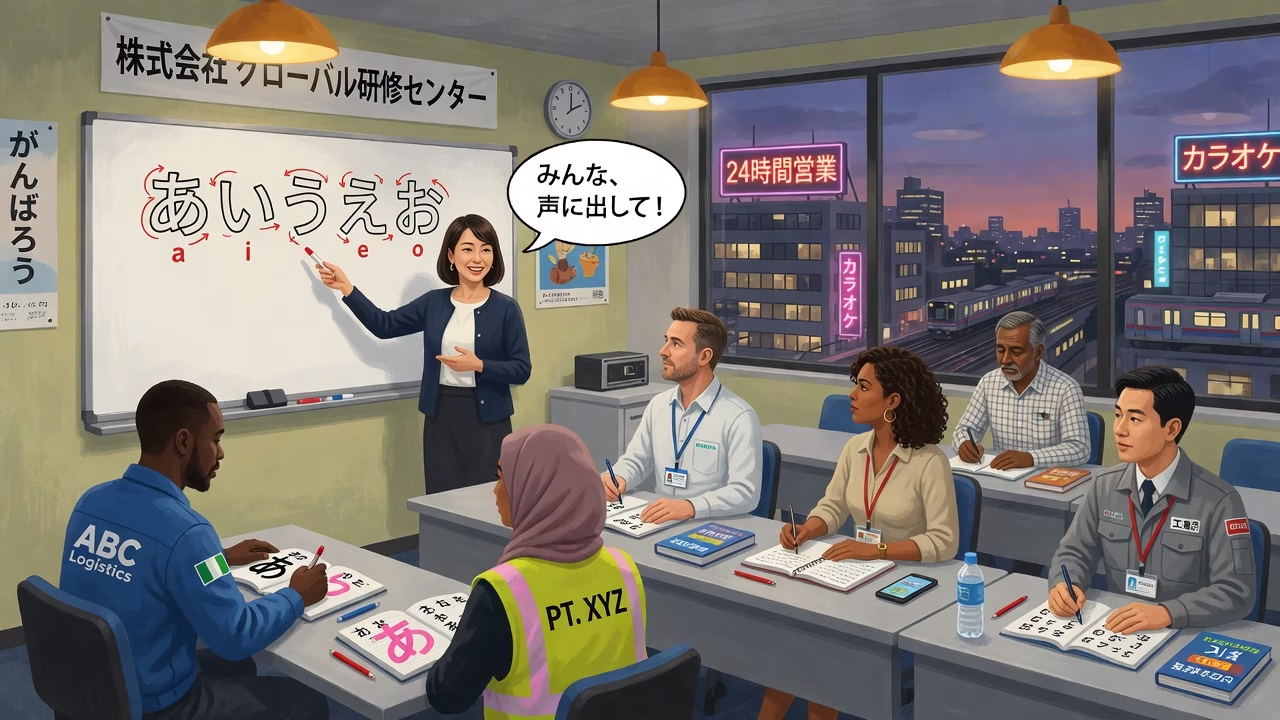
The Employment for Skill Development program, which replaces the much criticized technical intern training system, allows foreigners to work in sectors such as construction, nursing care and agriculture for three years, with transfers between employers possible under conditions and a path toward the Specified Skilled Worker status for those who advance. It also raises the language bar: applicants who do not pass a Japanese proficiency test at A1 level or higher must attend at least 100 hours of classes before starting work, and another 100 hours or more during the program. (Source : NHK World, nhk.or.jp, October 6, 2026, voir la source)
The scale is considerable. The government expects the new program to attract up to 420,000 people in its first two years. To measure readiness, the Immigration Services Agency and the labor ministry surveyed organizations listed by the Organization for Technical Intern Training: of 1,880 organizations contacted, 348 responded in the three days through October 7. Together, the respondents plan to accept 17,247 foreign workers in the first year, including 13,502 expected to arrive with the required language level already certified. (Source : The Japan Times, japantimes.co.jp, October 25, 2026)
Their answers sketch a system running late. Beyond the 51 organizations, or 14.7 percent, that have secured teachers and the 66 that at least see prospects, 106 more are still working on it, and 125, or 35.9 percent, have neither teachers nor any prospect of finding them. Many simply complained that registered teachers are in short supply, and that they do not know where to look or whom to consult. (Source : The Japan Times, japantimes.co.jp, October 25, 2026)
Language schools are not ready either
The shortage is not for lack of demand. In June, the Immigration Services Agency and other organizations asked about 900 Japanese language schools whether they would offer courses under the new program: fewer than 30 percent said they could, or would consider it. Many schools concentrate on international students and lack the expertise needed for job focused language training. (Source : NHK World, nhk.or.jp, October 6, 2026)
« The Employment for Skill Development Program cannot function without the cooperation of language schools », said Aoyagi Akiko, a deputy director at the agency's policy division, at a briefing session in September. « Many have told us their concerns. We want to use the next six months to thoroughly prepare. » (Source : NHK World, nhk.or.jp, October 6, 2026)
Companies are training their own teachers
With registered teachers scarce, some receiving organizations are improvising. In Okayama Prefecture, a support organization serving more than 50 companies plans to run language courses directly instead of outsourcing them, and is encouraging its own staff to obtain the Registered Japanese Language Teacher qualification. One of them, Ikeda Koji, put it plainly: very few instructors are trained to teach foreign workers rather than international students, and building that skill base is what will make workers confident. (Source : NHK World, nhk.or.jp, October 6, 2026)
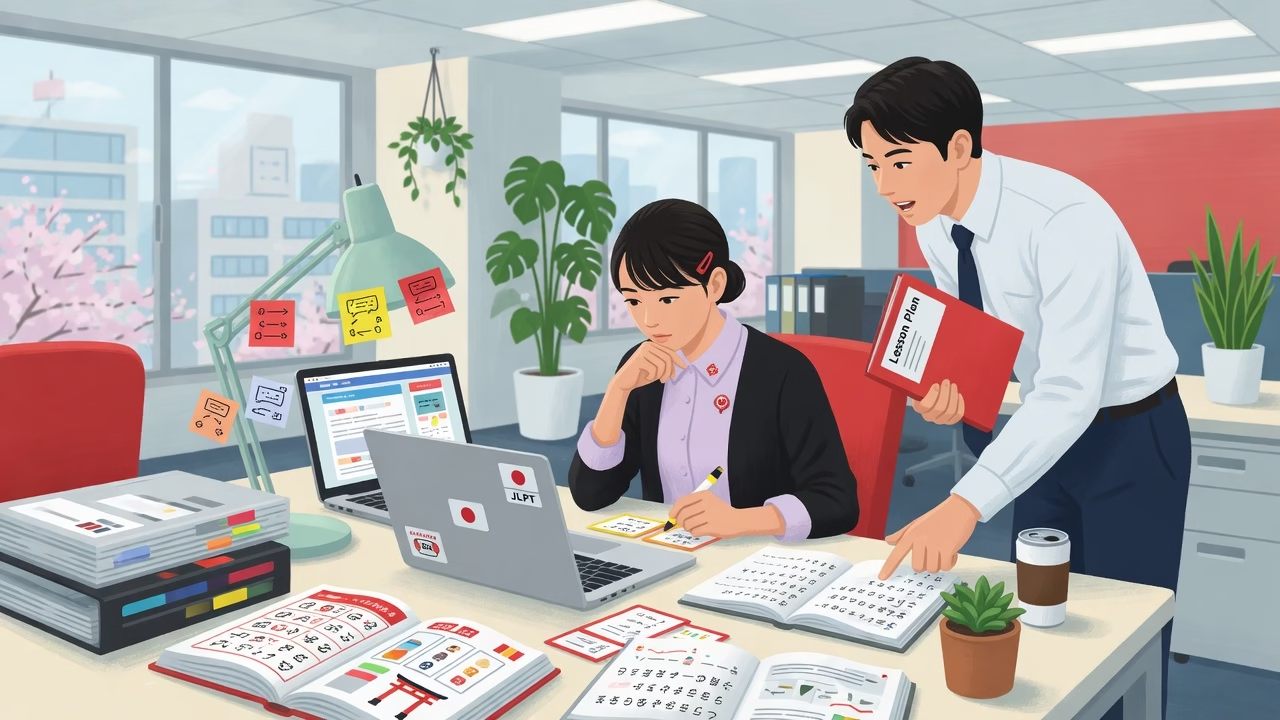
The trend is measurable. NHK found that 12 of the 27 schools and organizations offering registered Japanese language teacher training courses reported a rise in inquiries and enrollments from people involved in the foreign worker program. Experts still consider the pipeline far too small: « There are still far too few Registered Japanese Language Teachers », said Menju Toshihiro, a visiting professor at Kansai University of International Studies. « If Japan wants to continue attracting foreign workers, we must establish adequate support systems, including language education. Otherwise, they may choose to go elsewhere. » (Source : NHK World, nhk.or.jp, October 6, 2026)
Further reading: Japan quadruples its budget to teach Japanese to foreigners, our article of October 23.
The state is trying to help from above. As of August, Japan counted about 20,000 registered Japanese language teachers nationwide, and the education ministry's record budget request for Japanese language education, unveiled this month, is meant in part to expand that base. An agency official acknowledged after the survey: « We have to raise awareness about the system », adding that efforts to secure teachers would continue. (Source : The Japan Times, japantimes.co.jp, October 25, 2026)
Key takeaways
Behind the statistics sits an uncomfortable equation: Japan wants 420,000 new workers in two years, makes Japanese classes a legal obligation, and yet cannot staff the classrooms the law itself requires. For employers, the lesson is to secure teachers or partnerships now, because five months before the launch the margin is gone. For anyone who loves the Japanese language, the shortage reads differently: the Registered Japanese Language Teacher qualification is becoming a genuine career door, as companies, support organizations and schools all scramble for instructors who can teach workers rather than students. And for the workers themselves, whether those first classes actually materialize may decide how welcoming Japan's new program really is.
Sources
- The Japan Times, japantimes.co.jp : « Japan faces shortage of language teachers for foreign workers », October 25, 2026, voir la source
- NHK, news.web.nhk : « 育成就労制度 約36%の機関が“日本語教員確保めど立たず” », October 23, 2026, voir la source
- NHK World, nhk.or.jp : « Japan's foreign worker program fuels language teacher rush », October 6, 2026, voir la source